CV Structure for IT Job Seekers in 2026
How skills-based hiring is reshaping the IT CV in 2026 — the section order that works now, why a prominent skills block matters, and how to stay ATS-safe while tailoring per role.
- CV Structure
- IT Careers
- Skills-Based Hiring
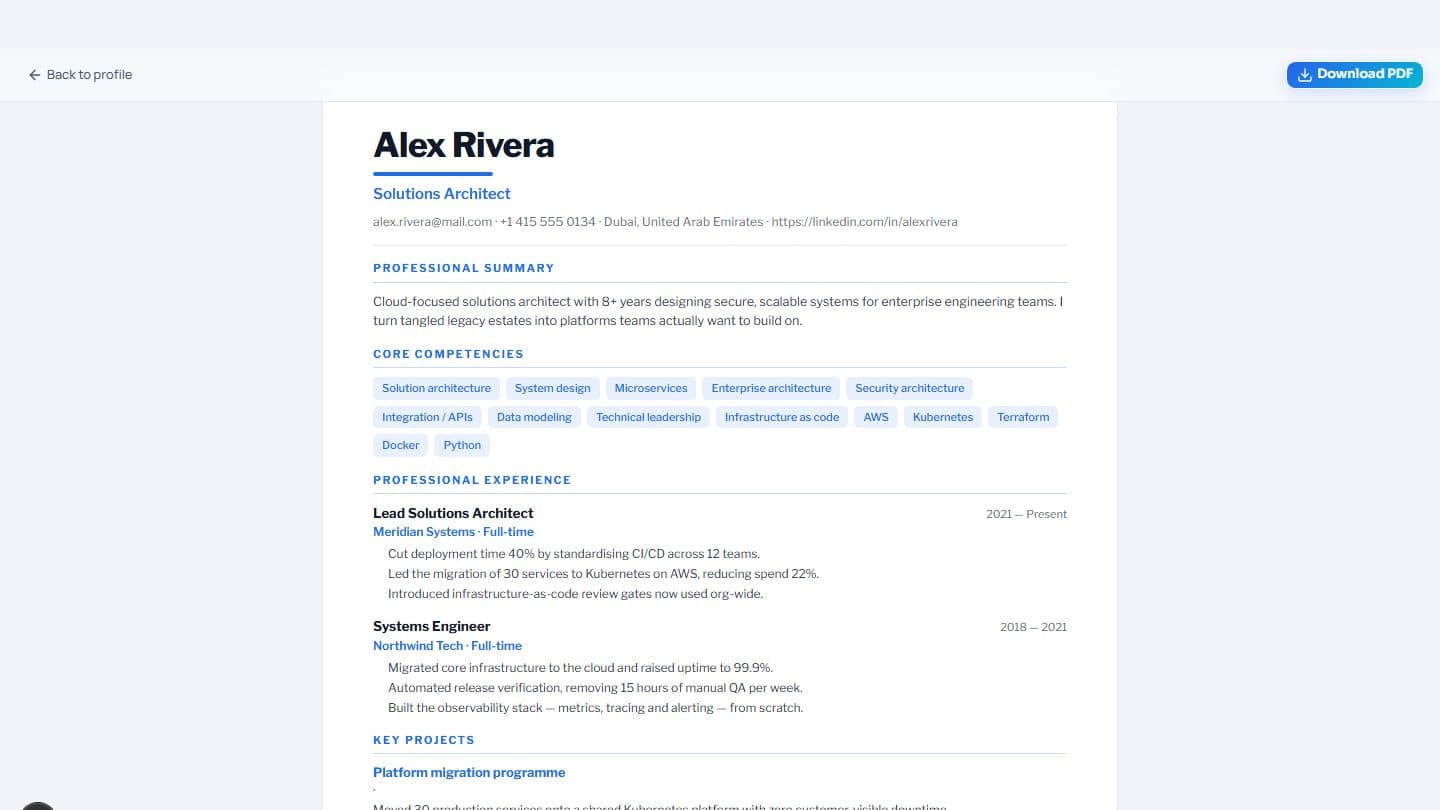
Hiring in tech has quietly changed shape. Employers are moving away from filtering on job titles and years-in-seat and toward skills-based hiring — asking one blunt question of every CV: can this person actually do the work? For IT job seekers in 2026 that shift is not a slogan. It rewrites where information belongs on the page, what gets read first, and which sections carry your interview.
The old CV listed duties: "responsible for maintaining servers." The new CV proves capability: the tools you command, the problems you solved, and the numbers that back it up. This guide walks through the CV structure that fits how IT roles are screened today.
Why skills-based hiring changes the structure

When a recruiter or an ATS evaluates skills first, your CV has to surface capability before it surfaces chronology. A hiring pipeline in 2026 typically does two passes: an ATS parse that matches your text against a required-skills list, then a six-second human skim that looks for proof.
That means the traditional "education at the top, skills as an afterthought at the bottom" order actively works against you. The fix is to reorder so the reader hits your competencies early — and to make every later section reinforce them. Structure is no longer decoration; it is how you rank.
The recommended section order for 2026

Use conventional headings an ATS recognizes, in this order:
- Contact — name, email, phone, city, and your GitHub/LinkedIn/portfolio as plain-text URLs.
- Professional summary — two or three lines naming your role, core stack, and one headline result.
- Core skills / tech stack — a scannable, grouped list of the technologies you actually use.
- Experience — reverse-chronological, each role with quantified, impact-first bullets.
- Projects — where less-experienced candidates prove skills the job history can't.
- Certifications, then Education.
This order answers the "can they do it?" question first, then supplies the evidence.
Make the skills section do real work

In a skills-based screen, this is the section that gets matched — so it belongs high and it needs to be organized, not a wall of buzzwords. Group by category so both the parser and the human find things fast:
- Languages: Python, TypeScript, Go
- Cloud & infra: AWS, Docker, Kubernetes, Terraform
- Data: PostgreSQL, Redis, Kafka
List the concrete tools the posting names, and only skills you can defend in an interview. A grouped, honest stack beats a long alphabetized dump every time — it reads as competence, not padding.
Turn experience bullets into proof

Skills-based hiring is really impact-based hiring. Each bullet should pair a skill with a measurable result. Compare the old duties-listing style:
Responsible for the CI/CD pipeline and deployments.
with an impact-first rewrite:
Cut deploy time from 40 to 6 minutes by rebuilding the CI/CD pipeline in GitHub Actions, enabling 12 releases/week.
The second line names the skill (CI/CD, GitHub Actions), proves it with numbers, and survives both the ATS keyword match and the human skim. Start every bullet with a verb, keep it to a line, and lead with the outcome.
Keep it ATS-safe and tailor per role

None of this matters if the parser can't read it. Stay on a single-column, reverse-chronological layout with real selectable text — no tables, no text boxes, no skills drawn as charts, and contact details in the body rather than the header. Certifications earn their own section because IT screens increasingly gate on them (AWS, CKA, Security+): list the exact credential name and year so it matches cleanly.
Then tailor. Skills-based hiring is per-role by nature, so mirror each posting's vocabulary — if it says "Kubernetes," write "Kubernetes," not "container orchestration." Reorder your skills groups to put the role's must-haves first. A CV tuned to the job beats a generic one every time.
Build it faster with iTrechHub

Getting this structure right by hand is fiddly, so iTrechHub does the heavy lifting. Its templates are single-column and ATS-safe by default, so the layout parses cleanly no matter which one you pick. The built-in ATS score checks your CV against a job description and flags missing skills and parsing problems before you apply, and the AI rewrite turns flat duty statements into quantified, impact-first bullets that you review and approve — so the version a recruiter sees is the one you actually earned.